

A practical guide to business insurance for freelancers and solopreneurs in 2026. what coverage matters, what it costs, and how to choose wisely.
If you’re one of the millions who ditched the 9-to-5 to freelance or build your own business, you already know independence comes with a trade-off: nobody’s got your back but you. One lawsuit, one stolen laptop, or one data breach can wipe out months of hard-earned income unless you’ve planned for it.
That’s where business insurance comes in. It’s not glamorous, and it’s easy to put off. But for a growing number of freelancers and entrepreneurs, it’s become as routine as budgeting for taxes or setting aside an emergency fund.

Why This Matters More Than Ever
Running a business today means dealing with digital payments, remote clients, and data you’re responsible for protecting. That creates risks that didn’t exist or weren’t as costly a decade ago.
A few questions worth sitting with
- What happens if a client sues you over a missed deadline or a dispute about your work?
- What if your laptop is stolen while you’re traveling for a client meeting?
- What if your website gets hacked and customer data leaks?
Insurance won’t prevent these things from happening. What it does is shift the financial risk off your shoulders and onto an insurer, so a single bad event doesn’t become a business-ending one.
The Coverage Types Worth Knowing
Not every freelancer needs every policy, coverage should match your actual exposure. Here’s what tends to matter most:
1. General liability insurance: is the foundation. It covers claims of bodily injury, property damage, or things like defamation tied to your business, say, a client slipping during an in-person meeting.
2. Professional liability (errors & omissions): protects you if a client claims your work cost them money. This one’s essential if you’re a consultant, coach, designer, or developer, anyone whose advice or output a client relies on.
3. Business property coverage: protects your equipment laptop, camera, monitors, whether you work from home, a co-working space, or on the road.
4. Cyber liability insurance: is increasingly non-negotiable if you store client data, run an online store, or process payments. A single breach can be expensive and damage trust that took years to build.
5. Commercial auto insurance: applies if you use your car for client visits, deliveries, or on-site work, your personal auto policy likely won’t cover business use.
6. Workers’ compensation: matters the moment you hire contractors or employees, even part-time. Requirements vary by state, so it’s worth checking early.
7. Business interruption coverage: helps replace lost income if something outside your control like a power outage, natural disaster, or similar disruption stops you from working.
Getting Covered Is Easier Than It Used to Be
Digital-first insurers have made shopping for coverage far less painful than it once was. Platforms like Next Insurance, Thimble, Hiscox, and Embroker let you get quotes and manage policies entirely online, often with no agent involved.
Many of these platforms use your business data to recommend coverage that actually fits helping you avoid both overpaying and leaving gaps. Some even sync with tools like Stripe, QuickBooks, or Shopify so your policy can adjust as your business changes.

NOTE: Always confirm current pricing and offerings directly with the provider. Insurance products and rates change.
What It Actually Costs and the Tax Upside
A lot of freelancers avoid insurance because they assume it’s out of reach financially. In practice, basic coverage is often more affordable than people expect, and pricing depends on your industry, revenue, and risk profile.
Here’s the part that makes it easier to justify: business insurance premiums are generally tax-deductible as an ordinary business expense. That means the cost of protecting your income can also help lower what you owe at tax time check with a tax professional for guidance specific to your situation.
How to Choose the Right Policy
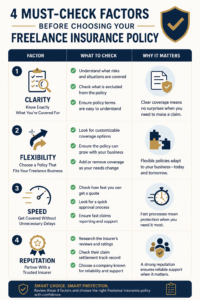
Price matters, but it shouldn’t be the only factor. When comparing options, look for:
· Clarity: Can you tell exactly what’s covered (and what isn’t) without wading through jargon?
· Flexibility: Can the policy scale as your business grows or changes?
· Speed: How fast are quotes, claims, and support?
· Reputation: Are other freelancers in your field actually recommending this insurer?
Comparison tools like CoverWallet or PolicySweet can help you evaluate multiple options side by side before committing.
The Bottom Line
Business insurance is the safety net you hope you never need but you’ll be glad it’s there the one time you do. It won’t land you your next client or write your next proposal, but it will keep a single bad event from undoing months of work.
Getting covered isn’t a sign you expect things to go wrong. It’s a sign you’re serious enough about your business to protect what you’ve built.